
 V-Belts
 Ribbed/Poly-V Belts
 Timing/Synchronous
 Banded Belts
 Special Belts
 Couplings
 Tensioners and Idlers
 PIX-Collapsible-Belt Length Measure
 PIX-Belt Drive Service Kit
 PIX-Digital Tension Meter
 PIX-X'Align Lasertool
 PIX-Belt Length Measure
 PIX-Analog Tension Tester
 PIX-Belt Profile Gauge
 PIX-Pulley Gauges
 PIX-Pulley Guage Banded Belts
 PIX-Pentagon Poly-V Belts Wear Gauge
 PIX-Pentagon Timing Belt Wear Gauges
 PIX-X'Slit Belt Cutting Machine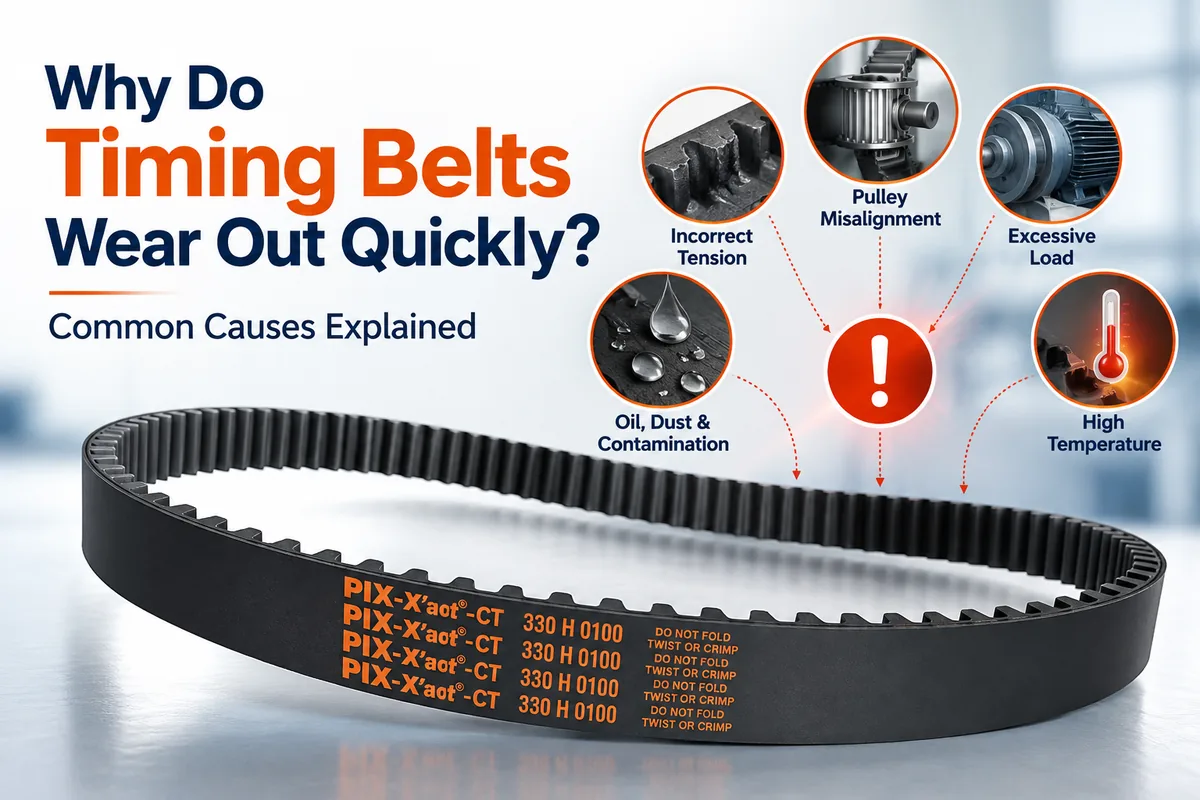
Timing belts play an important role in maintaining accurate synchronization and reliable power transmission in machinery and equipment. However, premature timing belt wear can reduce efficiency, cause synchronization problems, increase maintenance costs, and lead to unexpected downtime.
So, why do timing belts wear out quickly? Common causes include incorrect belt tension, pulley misalignment, excessive loads, incorrect belt selection, contamination, high operating temperatures, improper installation, and worn pulleys.
In this guide, we explain the most common Timing belt wear causes, early warning signs, and maintenance practices that can help extend belt life.
What Is a Timing Belt? Basic Function and Construction
A timing belt is a toothed power-transmission belt that transfers motion between shafts while maintaining precise synchronization. Unlike friction-driven belts, timing belts use teeth that engage with matching pulley grooves.
They are widely used in industrial machinery, automation systems, automotive sector, conveyors, CNC machines, robotics, packaging equipment, and other precision applications.
How Does a Timing Belt Work?
The teeth of the belt engage with the pulley teeth to provide positive power transmission with minimal slippage. Proper tooth engagement is essential for maintaining accurate movement and preventing premature timing belt tooth wear.
What Are Timing Belts Made Of?
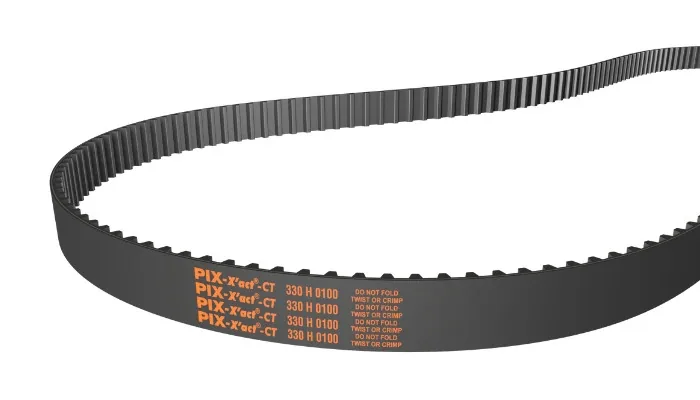
A typical timing belt consists of:
- Tensile cords – Provide strength and dimensional stability.
- Elastomer body – Protects the internal components and provides flexibility.
- Moulded teeth – Engage with the pulley for synchronized movement.
- Tooth-facing material – Helps protect the teeth and reduce wear.
Common Causes of Premature Timing Belt Wear
Several operating, installation, and maintenance factors can contribute to timing belt wear and failure.
Common causes include:
- Incorrect belt tension
- Pulley misalignment
- Excessive or shock loads
- Incorrect belt size, pitch, or tooth profile
- Worn or damaged pulleys
- Excessive operating temperature
- Oil or chemical exposure
- Dust, dirt, or moisture
- Improper installation
- Excessive bending or twisting
- Incorrect storage and handling
- Lack of regular inspection and maintenance
Incorrect Timing Belt Tension
Incorrect tension is one of the common causes of premature timing belt wear.
- Over-tensioning can increase stress on the belt, bearings, and shafts.
- Under-tensioning can cause tooth skipping, vibration, and poor engagement.
Always follow the manufacturer's recommended tension specifications and use suitable tensioning equipment during installation.
How Does Pulley Misalignment Cause Timing Belt Wear?
Pulley misalignment can cause the belt to track incorrectly and create uneven loading across the belt.
Misalignment may result in:
- Edge wear
- Uneven tooth wear
- Excessive vibration
- Abnormal noise
- Heat generation
- Belt tracking problems
- Reduced transmission efficiency
- Premature belt failure
Checking pulley alignment during installation and maintenance can significantly reduce timing belt problems.
Excessive Load and Incorrect Belt Selection
A timing belt must be selected according to the application's power, torque, speed, load, and operating conditions.
Using an undersized or unsuitable belt can cause excessive tooth stress, tooth wear, stretching, and eventual failure. Shock loads and frequent load changes can further increase belt stress.
Selecting the correct belt size, pitch, tooth profile, and construction is essential for reliable performance.
Heat, Oil, Chemicals, Dust and Moisture
Operating conditions can significantly affect timing belt lifespan.
Excessive heat can accelerate material degradation, while oil and chemicals may affect the belt compound. Dust and abrasive particles can increase surface and tooth wear, while moisture can affect certain belt materials and operating environments.
Choosing a belt suitable for the application's temperature and environmental conditions can help prevent premature wear.
Worn, Damaged or Contaminated Pulleys
A damaged or worn pulley can prevent proper tooth engagement and accelerate belt wear. Sharp edges, damaged teeth, burrs, and contamination can also damage the belt surface.
Inspect both the belt and pulleys regularly and replace damaged components when necessary.
Improper Installation, Bending and Handling
Incorrect installation can shorten belt life even when the correct belt has been selected.
Avoid:
- Forcing the belt onto the pulley
- Using sharp tools or excessive force
- Excessive bending or twisting
- Incorrect belt tension
- Poor pulley alignment
- Improper storage or handling
Following the manufacturer's installation recommendations helps maintain proper belt performance.
What Are the Early Signs of Timing Belt Wear?
Identifying wear early can help prevent unexpected timing belt failure.
Look for:
- Worn or damaged teeth
- Cracks or surface deterioration
- Edge fraying
- Glazing
- Excessive vibration
- Unusual operating noise
- Belt tracking problems
- Tooth skipping
- Loss of synchronization
- Abnormally high belt temperature
If these signs appear, inspect the belt, pulleys, tension, and overall drive system before continued operation causes further damage.
How to Prevent Premature Timing Belt Wear?
Following basic timing belt maintenance practices can help extend belt life and improve equipment reliability.
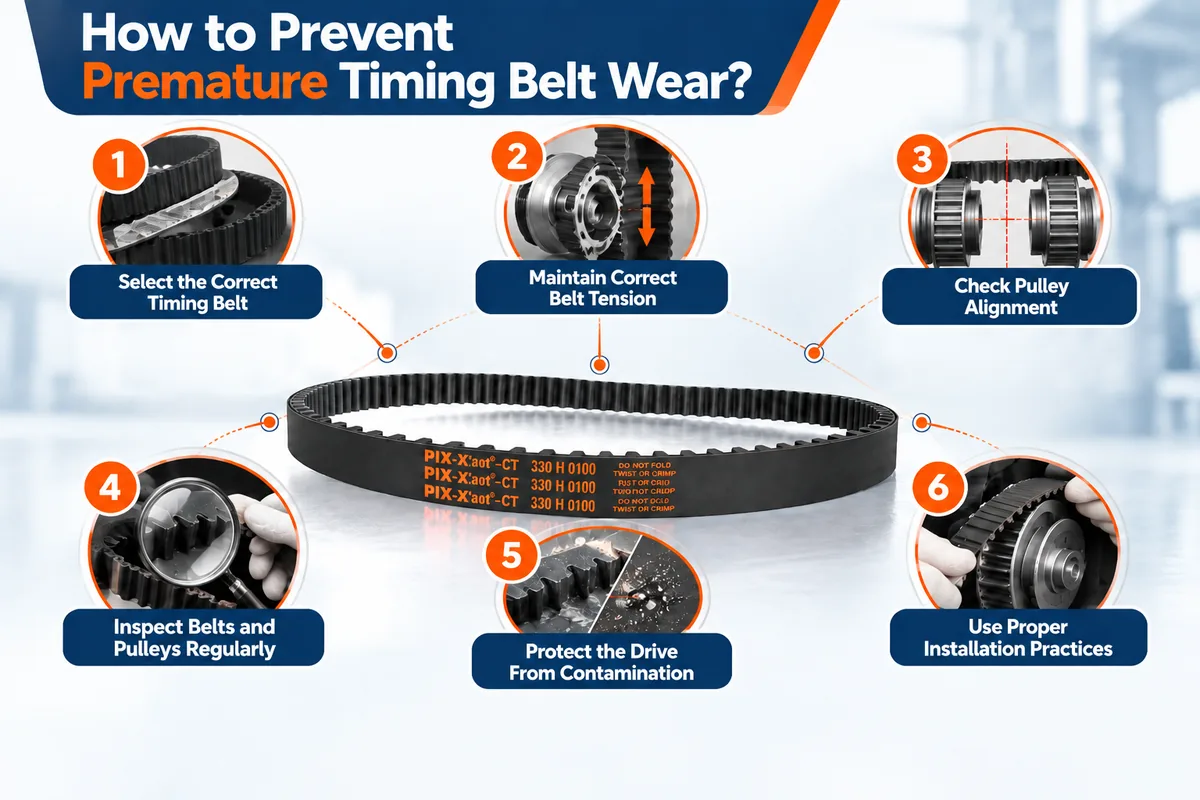
1. Select the Correct Timing Belt
Choose a belt based on power, speed, torque, load, temperature, pulley dimensions, and application requirements.
2. Maintain Correct Belt Tension
Check and maintain the manufacturer's recommended tension to prevent excessive stress or tooth skipping.
3. Check Pulley Alignment
Ensure the pulleys are properly aligned to prevent uneven loading and edge wear.
4. Inspect Belts and Pulleys Regularly
Look for cracks, worn teeth, fraying, contamination, and pulley damage during routine maintenance.
5. Protect the Drive From Contamination
Keep the belt drive protected from oil, chemicals, dust, moisture, and other contaminants where required.
6. Use Proper Installation Practices
Use appropriate tools and follow the recommended installation procedure. Never force or twist the belt onto the pulley.
How Long Do Timing Belts Last?
There is no single service-life figure for every timing belt. Timing belt lifespan depends on several factors, including:
- Belt construction and material
- Operating speed and load
- Belt tension
- Pulley alignment and condition
- Operating temperature
- Oil or chemical exposure
- Dust and contamination
- Shock or cyclic loads
- Installation quality
- Maintenance practices
Regular inspection and correct operating conditions can help maximize the useful life of a timing belt.
PIX Timing Belts for Reliable Power Transmission
PIX offers a range of Timing / Synchronous Belts designed for reliable and precise power transmission across various applications.
The range includes Classical Timing Belts, STD and HTD profiles, High-Power Timing Belts, High-Power High-Torque Timing Belts, High-Temperature Timing Belts, and Polyurethane Timing Belts.
These belts are suitable for applications such as:
- Robotics
- Textile machinery
- CNC machines
- Packaging equipment
- Food processing
- Office equipment
- Medical equipment
- Fans
- Precision power-transmission systems
Conclusion
Premature timing belt wear is often the result of incorrect tension, pulley misalignment, excessive loads, unsuitable belt selection, contamination or improper installation. Identifying these issues early and maintaining the complete belt drive system can help reduce wear, prevent unexpected failures and extend timing belt service life.
Choosing the right timing or synchronous belt for the application is equally important. By considering factors such as load, speed, temperature, operating environment, and pulley configuration, businesses can improve power-transmission efficiency and equipment reliability. Regular inspection, correct installation, and preventive maintenance further help minimize downtime and replacement costs.
With the right belt selection and maintenance practices, timing belts can deliver reliable, precise, and efficient power transmission across a wide range of industrial applications.
Need the right timing belt for your application? Explore PIX Timing Belts for reliable, high-performance power transmission.
Explore Timing Belts