- About
- Products
- Accessories
 PIX-Collapsible-Belt Length Measure
 PIX-Belt Drive Service Kit
 PIX-Digital Tension Meter
 PIX-X'Align Lasertool
 PIX-Belt Length Measure
 PIX-Analog Tension Tester
 PIX-Belt Profile Gauge
 PIX-Pulley Gauges
 PIX-Pulley Guage Banded Belts
 PIX-Pentagon Poly-V Belts Wear Gauge
 PIX-Pentagon Timing Belt Wear Gauges
 PIX-X'Slit Belt Cutting Machine
- Investors
- Sustainability
- Careers
- Contact

 V-Belts
 Ribbed/Poly-V Belts
 Timing/Synchronous
 Banded Belts
 Special Belts
 Couplings
 Tensioners and Idlers
- Business Partners Login
- About
- Products
- Accessories
- PIX-Collapsible-Belt Length Measure
- PIX-Belt Drive Service Kit
- PIX-Digital Tension Meter
- PIX-X'Align Lasertool
- PIX-Belt Length Measure
- PIX-Analog Tension Tester
- PIX-Belt Profile Gauge
- PIX-Pulley Guages
- PIX-Pulley Guage Banded Belts
- PIX-Pentagon Poly-V Belts Wear Gauge
- PIX-Pentagon Timing Belt Wear Gauges
- PIX-X'Slit Belt Cutting Machine
- Investors
- Sustainability
- Careers
- Contact
When a production line fails, people often look at the biggest machines first. But in many cases, the real issue is much smaller — a worn or failed timing belt.
It's easy to ignore a timing belt because it operates quietly in the background. But when it fails, the consequences are immediate: downtime, production loss, and expensive repairs.
That's why understanding how a timing belt works and choosing the right one is critical for any industrial or automotive setup.
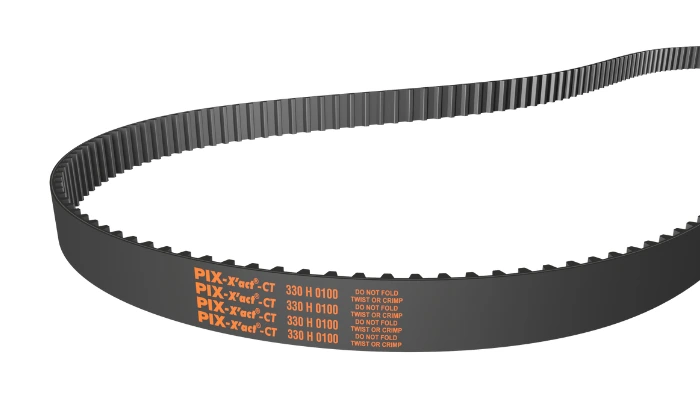
What is a Timing Belt?
A timing belt is a toothed belt designed to transfer motion between shafts with perfect synchronization.
Unlike traditional belts that rely on friction, a timing belt uses teeth that mesh with pulleys. This ensures:
- No slippage
- Consistent speed
- High positional accuracy
This is exactly why timing belts are widely used in automation, engines, and precision machinery.
If you're exploring options, you can check different types of timing belts for industrial applications.
Types of Timing Belt Used in Industry
Not every timing belt is built for the same job. Choosing the wrong type is one of the most common reasons for early failure.
Classical Timing Belt
Cost-effective and suitable for standard applications, but not ideal for high torque.
HTD Timing Belt (High Torque Drive)
Designed for heavy loads and better power distribution.
Super Torque Timing Belt (STS)
Used in high-precision systems where accuracy is critical.
Polyurethane Timing Belt
Preferred in clean environments like food processing and pharmaceuticals.
Double-Sided Timing Belt
Used where power needs to be transmitted in multiple directions.
For applications requiring dual-side engagement, explore double-sided timing belt solutions.
Where Timing Belts Are Used
A timing belt plays a critical role across multiple industries:
- Industrial Automation: Ensures precise movement in CNC machines and robotics
- Automotive Systems: Maintains synchronization in engine components
- Packaging & Printing: Supports high-speed, accurate operations
- Special Machinery: Used in custom-built equipment with specific motion requirements
For more complex or customized needs, you can also explore special construction belts.
How to Choose the Right Timing Belt
Selecting the right timing belt isn't just about size — it's about application fit.
Here are key factors to consider:
- Load capacity (always consider peak load)
- Operating environment (heat, dust, chemicals)
- Pulley condition and alignment
- Correct tensioning requirements
Even a high-quality timing belt can fail early if these factors are ignored.
Supporting components also matter — check compatibility with pulleys and power transmission components.
Timing Belt Maintenance Tips
A timing belt doesn't require heavy maintenance, but regular checks can significantly increase its lifespan.
- Inspect for cracks, wear, or frayed edges
- Monitor belt tension over time
- Replace based on operating hours, not just appearance
- Store belts properly to avoid deformation
With proper care, a timing belt can last between 15,000 to 30,000 hours.
Why Quality Timing Belt Matters
Many businesses choose a timing belt based on price, but that approach often backfires.
A high-quality timing belt offers:
- Better durability
- Reduced vibration
- Consistent performance
- Lower long-term costs
In contrast, a poor-quality timing belt increases the risk of unexpected downtime, which is far more expensive than the belt itself.
Conclusion
A timing belt may seem like a minor component, but its role in maintaining precision and efficiency is critical.
From industrial automation to automotive systems, the right timing belt ensures smooth operation and reduces the risk of costly breakdowns.
Making the right choice and maintaining it properly can have a lasting impact on overall performance and reliability.